Booking choice: The local-guide walk, from $5 per person. Check dates Tour details
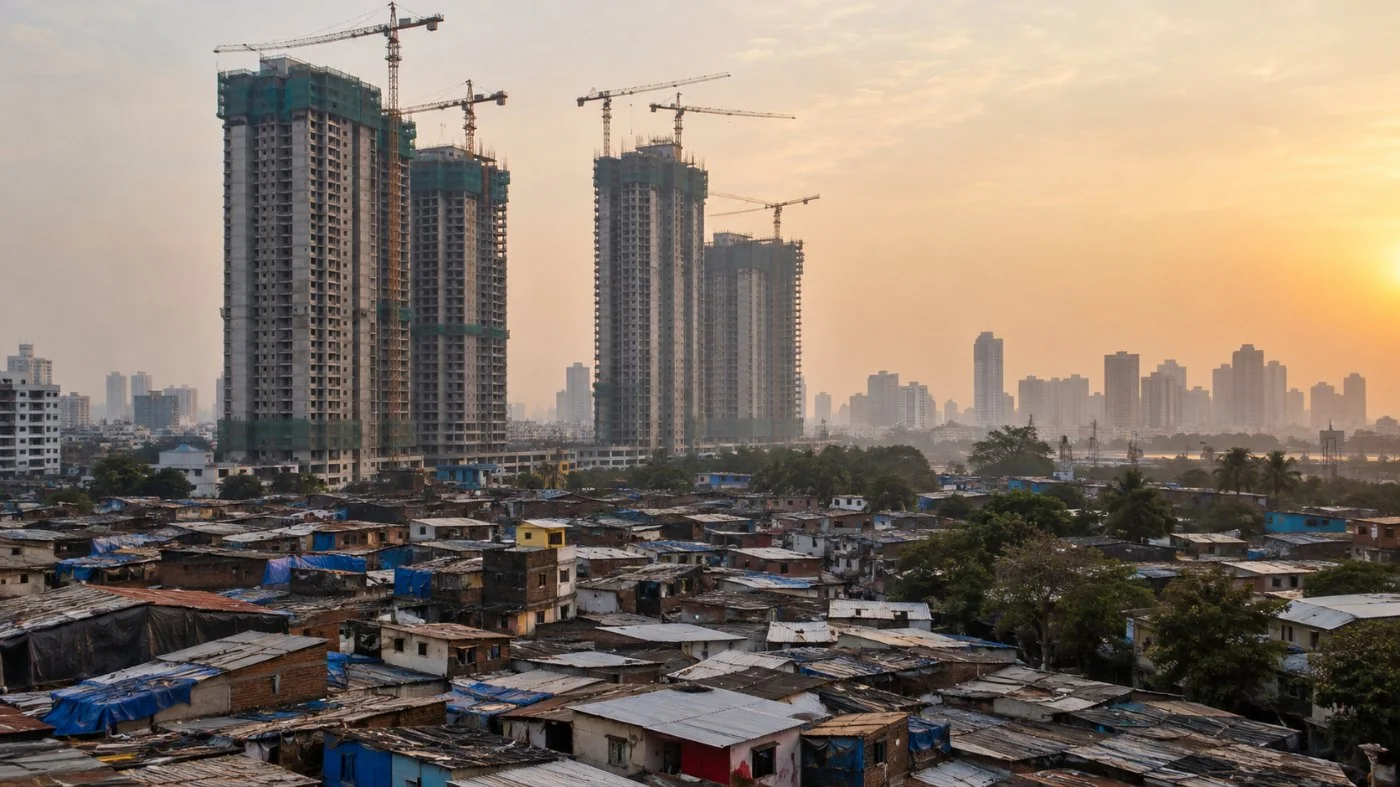
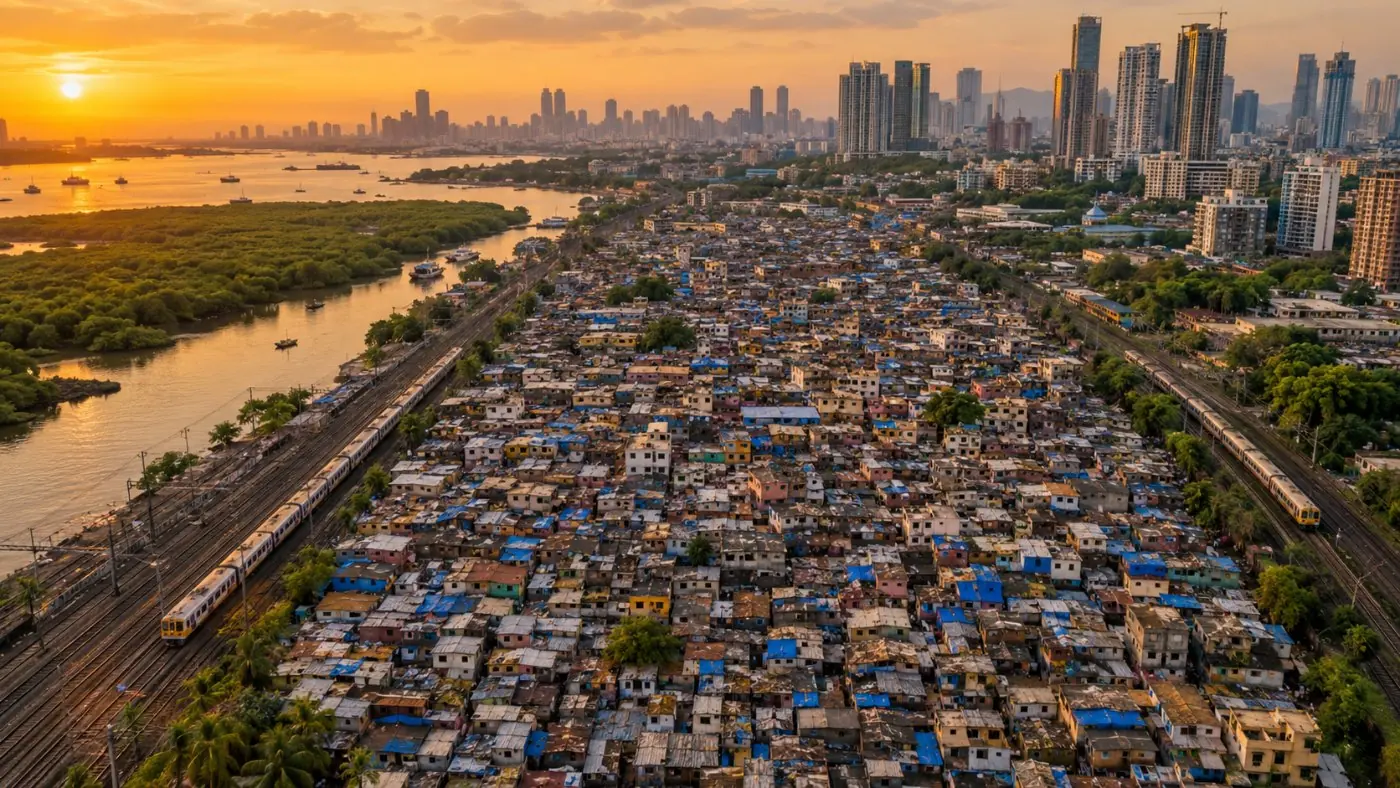
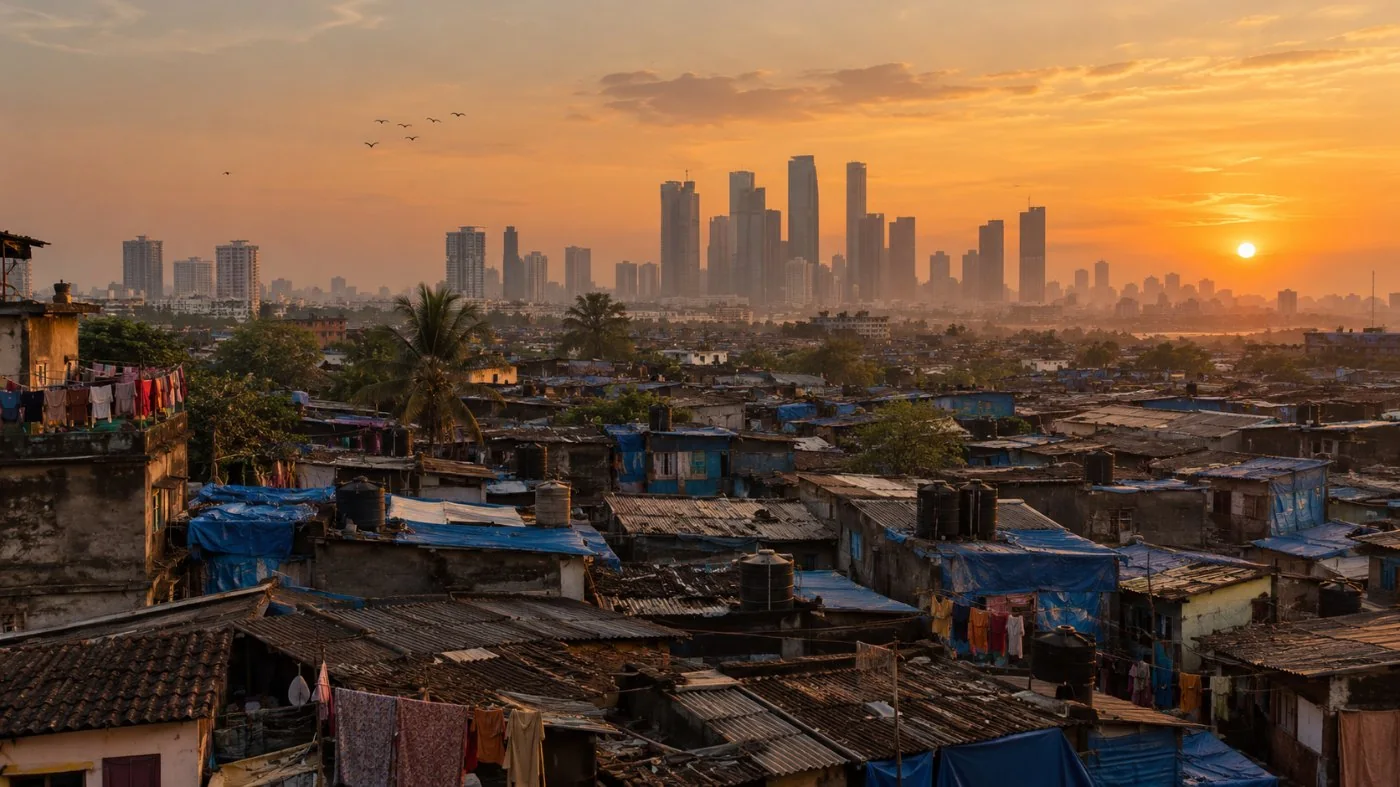
Dharavi sits in the middle of Mumbai, between the Western and Central railway lines, with Mahim Creek and the Mithi River on its northern side. It is a few minutes from the Bandra Kurla Complex, one of the city's business districts, which is why its land is worth so much.
Below are the questions people search for most, answered with the best source we could find. Where sources conflict, we say so.
The quick answer
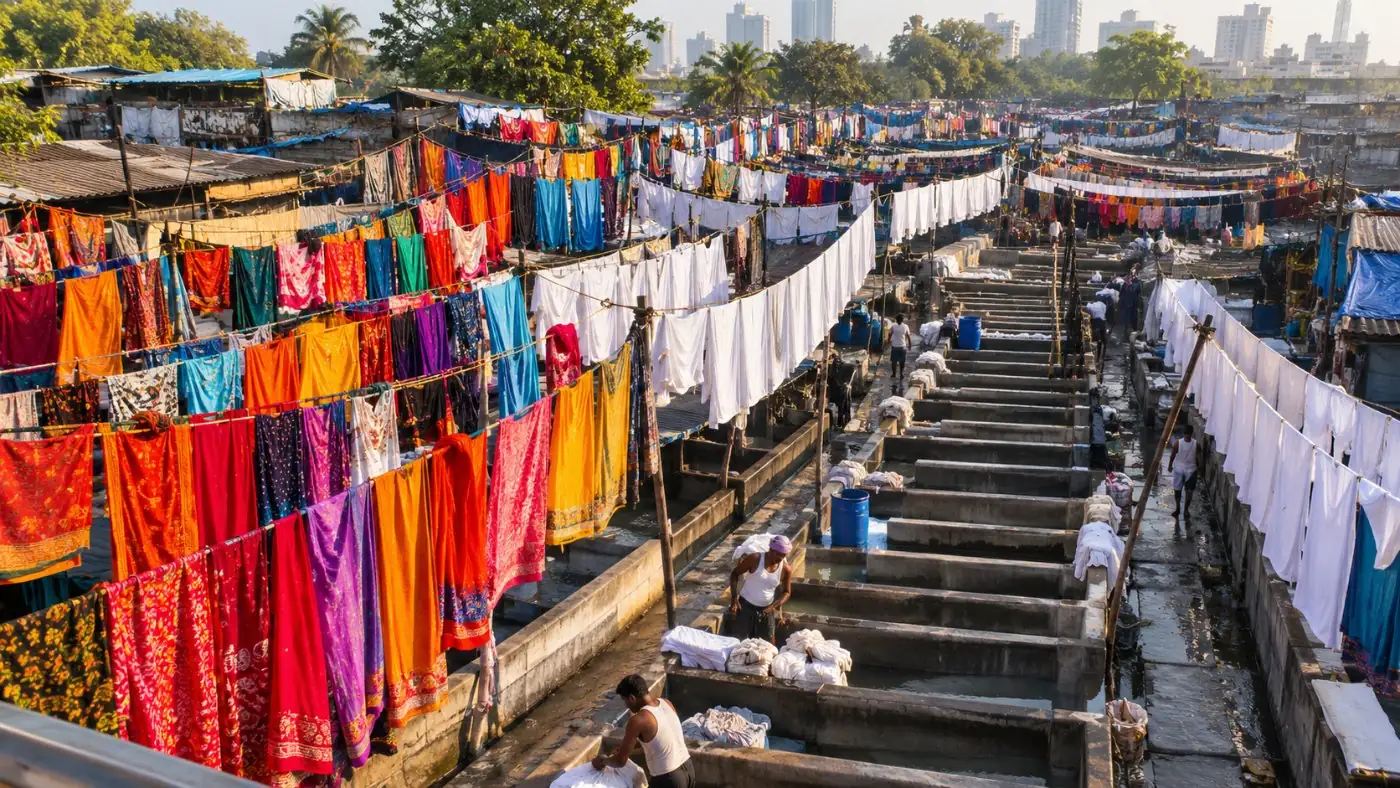
Dharavi covers about 240 hectares (some 590 acres) and is home to an estimated 700,000 to 1 million people, though no census counts it as one unit. It is not the largest slum in Asia: older lists put Orangi Town in Karachi ahead, and several Mumbai slum belts are bigger. Its informal economy is estimated at $500 million to $1 billion a year, with recycling, leather, pottery and garments the main trades.
Is Dharavi the largest slum in Asia?
No. It is one of the largest and among the densest, but Orangi Town in Karachi has long been ranked ahead, and several Mumbai slum belts are bigger.
The World Economic Forum's 2016 list of the world's biggest slums put Dharavi third:
| Settlement | City | WEF 2016 estimate | Caveat |
|---|---|---|---|
| Orangi Town | Karachi | 2.4 million | The 2023 Pakistan census counts 596,919 in Orangi Town |
| Ciudad Neza | Mexico City | 1.2 million | Now a serviced municipality, 1,077,208 people (2020 census) |
| Dharavi | Mumbai | 1 million | No census count for Dharavi as a unit |
| Kibera | Nairobi | 700,000 | The 2009 Kenya census counted 170,070 |
| Khayelitsha | Cape Town | 400,000 | Township, often listed with slums |
Source: World Economic Forum, with census caveats from each city. Within Mumbai, raw 2011 census data suggested at least four suburban slum belts, including Kurla-Ghatkopar and Mankhurd-Govandi, are larger than Dharavi. In Census 2011, 41% of Greater Mumbai's households lived in slums, against 17.4% across India (Business Standard). Even Adani, which is redeveloping it, calls Dharavi "one of Asia's largest informal settlements".
How many people live in Dharavi?
Estimates run from about 300,000 to over 1 million. The most quoted figure is about 1 million; no census counts Dharavi on its own.
Reuters and the state government both use about 1 million. During COVID, PTI reported about 650,000. Older academic estimates put it near 300,000. The redevelopment survey counted about 99,000 tenements in 2025, and officials plan 1.25 to 1.5 lakh (125,000 to 150,000) new homes for the residents.
The Dharavi assembly constituency had 261,892 registered voters in 2024, but its boundary is not the slum's, and many residents are children or not registered. Take any precise number with a pinch of salt.
How big is Dharavi?
About 240 hectares, or roughly 590 acres, which is about 2.4 square kilometres. Different sources give anything from 430 to 620 acres.
The official Dharavi Notified Area was declared in two parts, 178.30 ha in 2005 and 62.05 ha in 2009, together about 240 ha (Slum Rehabilitation Authority). Reuters uses 240 ha and 590 acres. The redevelopment project has been described as 259 ha or 620 acres, because it includes land outside the slum, and the chief minister said in 2026 that only 104 ha of it is buildable.
For scale: that is about two-thirds the size of New York's Central Park. Put 1 million people on 2.4 km² and you get over 400,000 per square kilometre (our sum), which is why the lanes are so narrow.
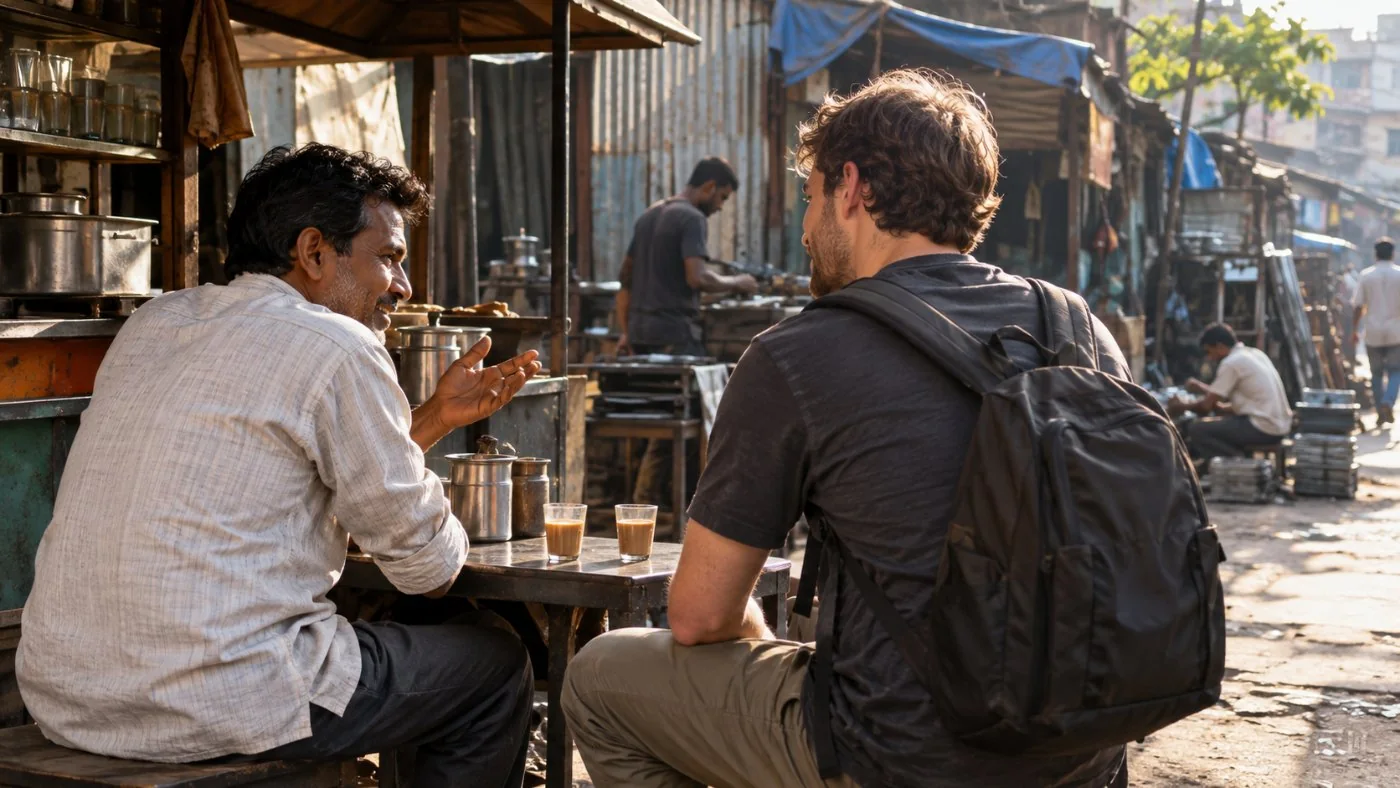
See the scale on foot: a local guide, the workshops and the residential lanes, from a few dollars.
Check dates for the local-guide walkIs Dharavi's economy really worth $1 billion?
It might be, but nobody has measured it. Estimates run from about $500 million to over $1 billion a year; none comes from an official survey.
The "billion-dollar slum" line goes back to a 2007 Observer article, cited on Wikipedia. Other estimates: $500 to 650 million (BBC, 2010), $665 million (Reality Gives, 2016) and INR 7,000 crore (Business Standard, 2016, with leather about a third).
- Recycling: a government technology council report says about 10,000 people work in Dharavi's plastic recycling and claims its 13th Compound handles 80% of Mumbai's plastic waste.
- Leather: about 20% of residents work in skins, tanning and leather goods. The first tannery arrived in 1887.
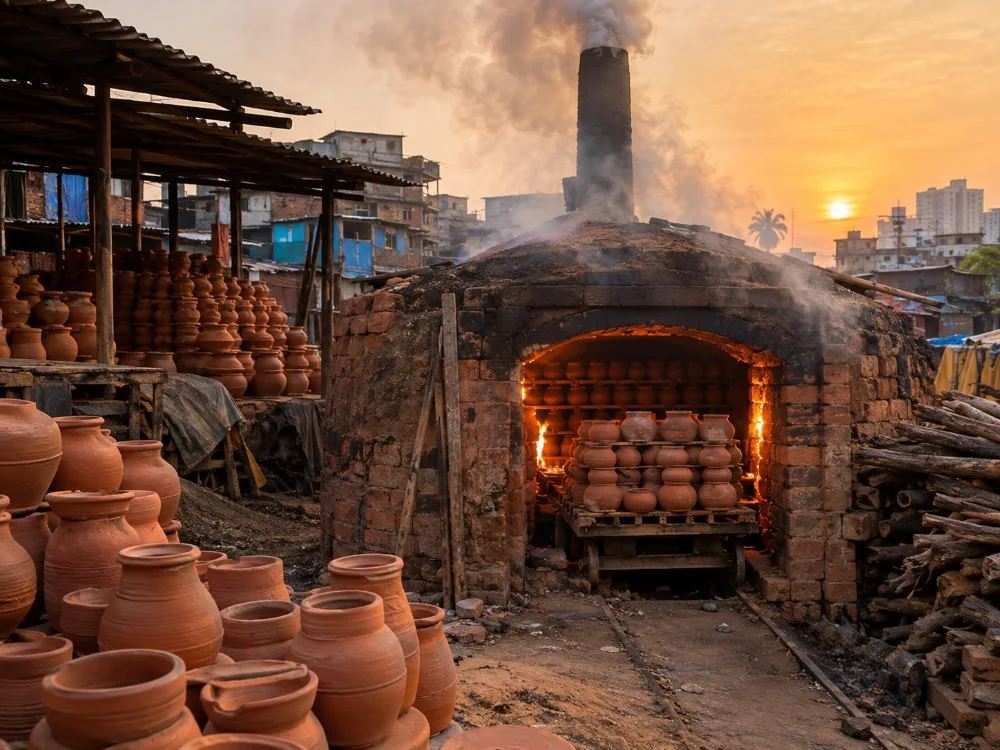
- Pottery: Kumbharwada's potters fire diyas, water pots and yoghurt cups, with peaks before Diwali and Navratri.
- Food and garments: bakeries, papad made in homes (women earn about Rs 100 a day, Reality Gives says), embroidery and tailoring.
Business counts vary just as much: from about 1,000 small units to 15,000 single-room factories, depending on who counted and what.
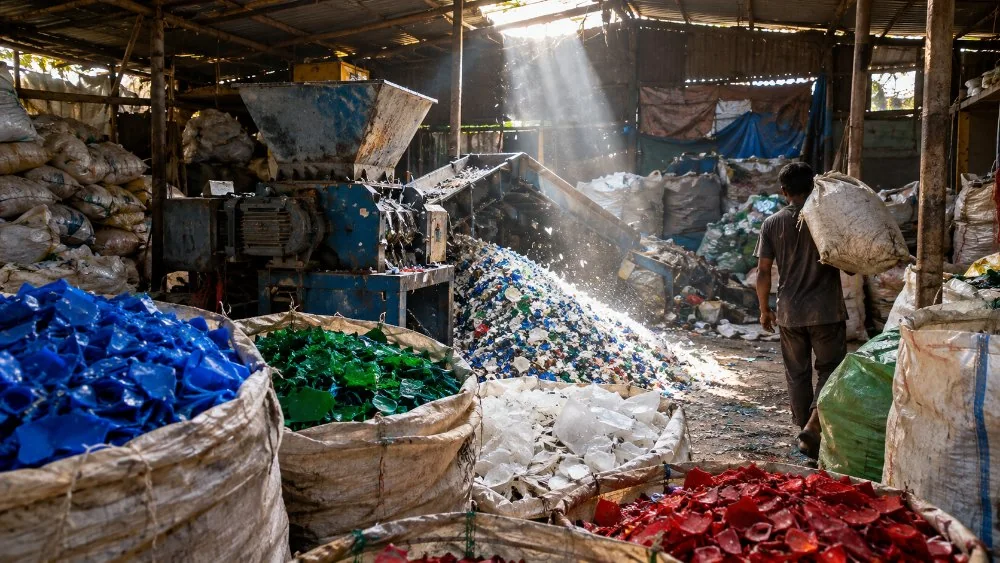
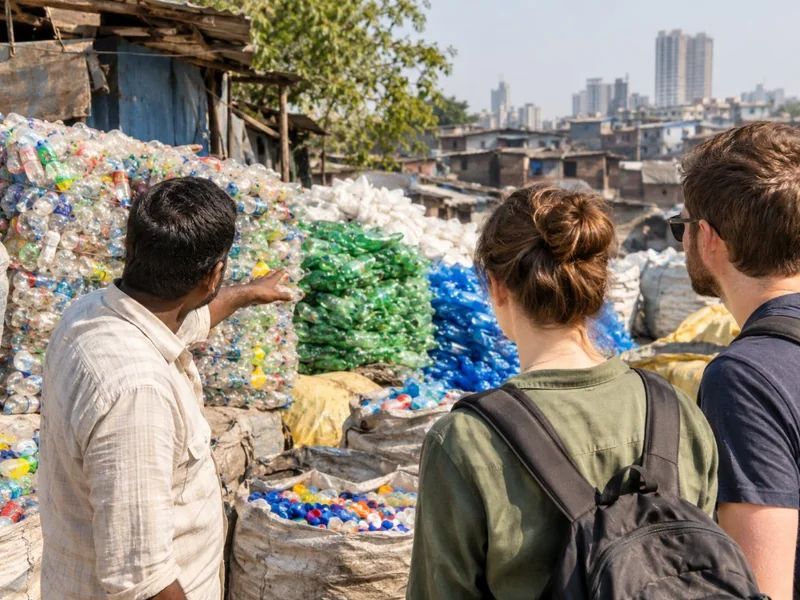
Walk through the recycling, leather and garment units with a local guide; the listing offers short and long options.
Explore the local-guide walk Tour detailsWho lives in Dharavi?
Migrants and their descendants from across India: Marathi, Tamil, Gujarati, North Indian, Telugu and more. About 29% are Muslim, about 6% Christian, and most of the rest Hindu.
The communities settled in layers. Koli fishing families lived here first. Leather workers came in the late 19th century, among them Maharashtrian Dalits, Tamil migrants and Muslim tannery workers. Gujarati potters built Kumbharwada. North Indian workers arrived later. Today residents trace their roots to Maharashtra, Uttar Pradesh, Bihar, Tamil Nadu, Andhra Pradesh, Karnataka, West Bengal and the Northeast.
Is Dharavi full of Tamils? No official breakdown exists. Tamils are a large historic community, which is why the film Kaala is set among them, but they are one group of many. Temples, mosques and churches stand side by side, and the assembly seat is reserved for Scheduled Castes. Literacy is about 69%, cited as the highest of any Indian slum.
How many toilets does Dharavi have?
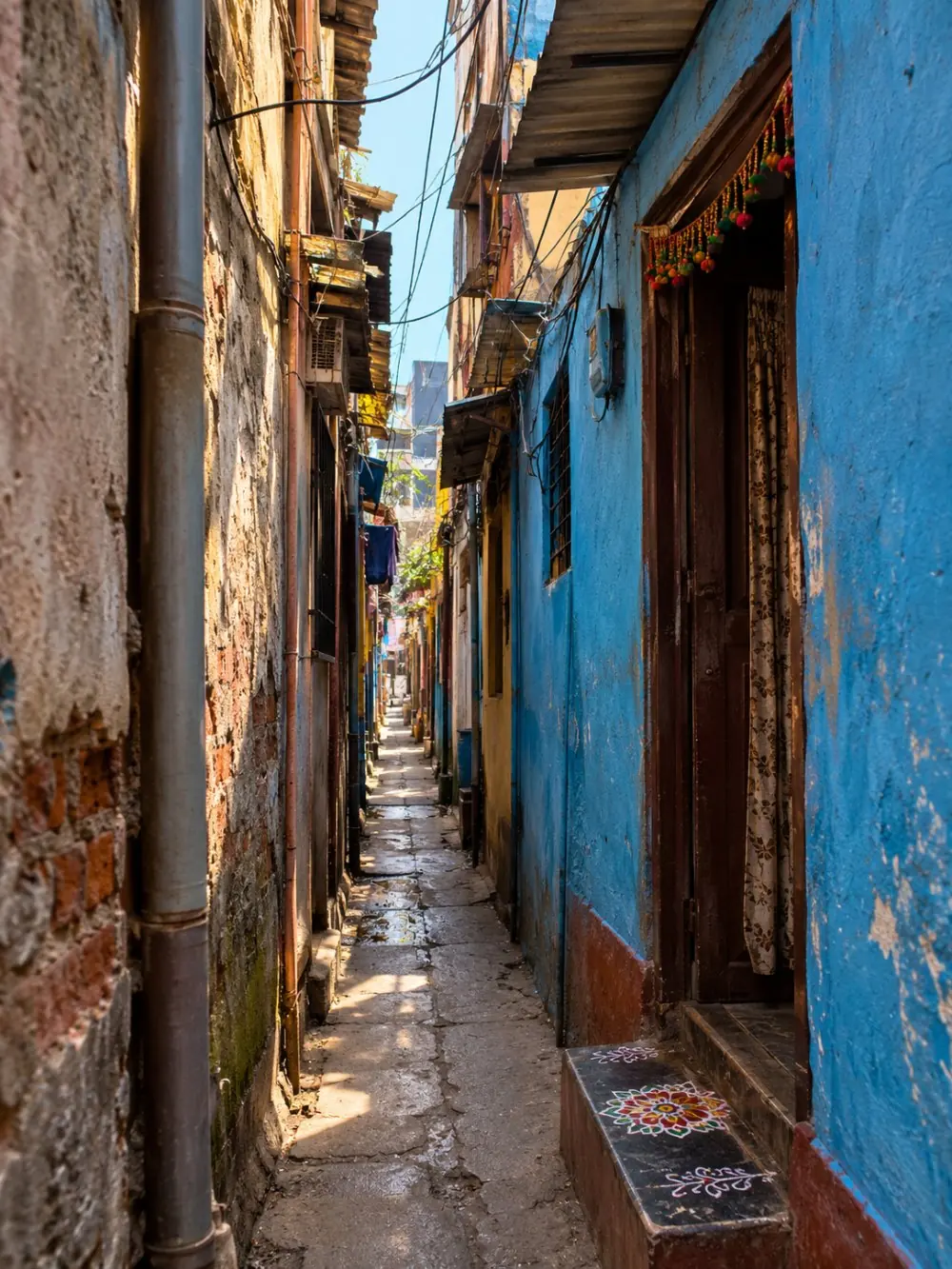
Roughly 450 public and community toilet blocks for 650,000 to 1 million people. The often-quoted ratio is one toilet per 1,440 people.
The 1-per-1,440 figure comes from the UN Human Development Report of 2006. PTI counted 225 community toilets, 100 public toilets and 125 MHADA toilets in 2020, which gives the same ratio for 650,000 people. Blocks have several seats, so "per toilet" is not "per seat". Water comes mostly from public standpipes.
Is Dharavi legal? Partly. It is a notified slum under the Slum Rehabilitation Authority, and residents of homes from before 1 January 2000 are protected from eviction without rehousing. Most land belongs to the city, state and central governments. The detail is in the redevelopment guide.
See how the lanes, homes and trades fit together on a walk with groups of six.
Check dates for the Reality Tours walkWhat is the history of Dharavi?
A Koli fishing village on a mangrove island, it filled with tanneries and migrants from the 1880s and was India's largest slum by 1947.
- 18th century: an island of mangrove swamp. Riwa Fort was built on the Mithi River in 1737.
- 1880s: the first tannery moves in (1887), as does Badi Masjid, the oldest mosque. Founding dates of 1882 or 1884 appear, but there is no formal one.
- 1896: the plague kills nearly half of Dharavi's population.
- 1947: by independence, Dharavi is the largest slum in India.
- 2004: the state approves the first redevelopment plan.
- 2005: Reality Tours starts the first walking tours.
- 2020: after a COVID outbreak, the WHO cites Dharavi as an example of control through testing and tracing.
- 2023 to 2026: the Adani-led redevelopment is awarded, surveyed and begins construction.
Which films and celebrities are linked to Dharavi?
Slumdog Millionaire, Gully Boy and Kaala were filmed partly there, and Dharavi's hip-hop scene, MC Altaf and 7Bantai'Z among them, is famous across India.
- Slumdog Millionaire (2008): Danny Boyle told NPR they "filmed in two slums", one of them Dharavi. It won eight Oscars. Amaze Tours runs a Slumdog Millionaire walk.
- Gully Boy (2019): Zoya Akhtar's film, set in Dharavi and loosely based on the rappers DIVINE and Naezy, won a record 13 Filmfare awards.
- MC Altaf: a Dharavi rapper who opens "India 91" on the Gully Boy soundtrack and was 19 in 2019.
- Kaala (2018): Rajinikanth plays a Tamil leader resisting a land grab in Dharavi; the local crew Dopeadelicz appears.
- Others: Deewaar (1975), Salaam Bombay! (1988), and Kevin McCloud's Slumming It (Channel 4, 2010).
7Bantai'Z, formed in 2014, raps in Marathi, Hindi, English, Tamil and Telugu, and with Dopeadelicz forms the Dharavi United collective.
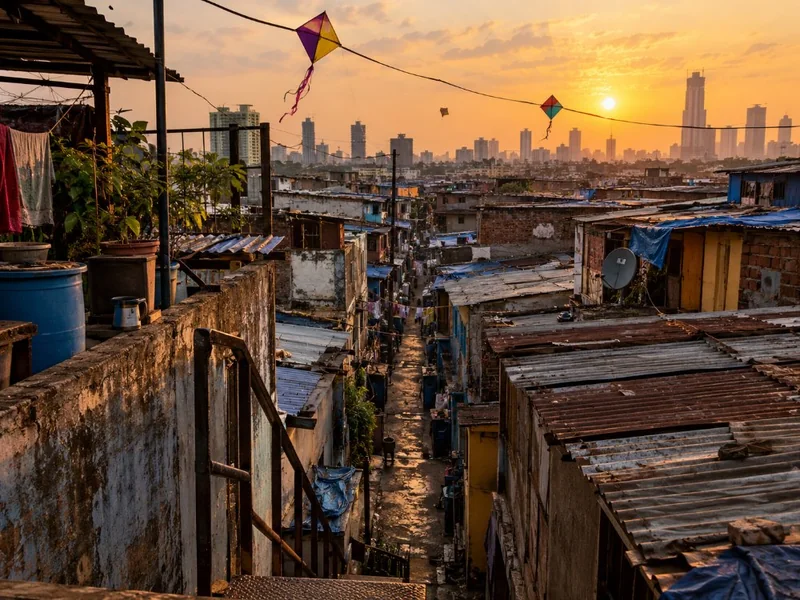
Walk the lanes made famous by the film, past soap, pottery and recycling units, ending at a pottery.
Explore the Slumdog Millionaire walk Tour detailsFrequently asked questions
What is Dharavi famous for?
Its size, its informal economy (recycling, leather, pottery, garments), and films such as Slumdog Millionaire and Gully Boy.
Is Dharavi the richest slum?
That is a media label based on turnover estimates of $500 million to $1 billion a year. No measured figure supports a ranking.
What percentage of Mumbai lives in slums?
41% of households in Greater Mumbai lived in slums in Census 2011, down from 54.5% in 2001. Higher figures of 60% or more circulate but do not match the census.
Is Dharavi legal?
It is a notified slum, recognised by the state. Pre-2000 residents have a right to free rehousing in the redevelopment.
Ready to book
Choose your walk
Free cancellation up to 24 hours before on every option. Prices are from-prices in USD and move with the season.
Dharavi Slum Tour with a Local Guide
- Local guide on foot through Dharavi
- Workshops, markets and residential lanes
- Private option on some dates
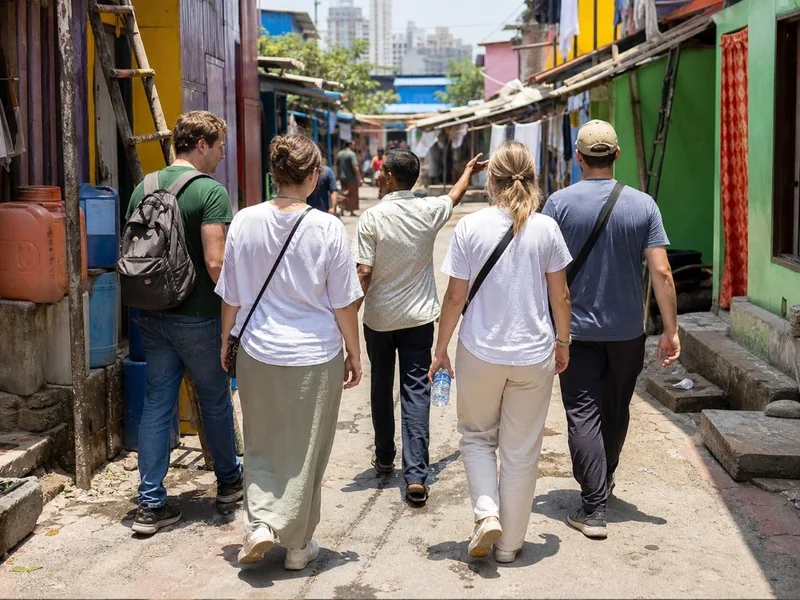
Dharavi Walking Tour with Reality Tours
- English-speaking local guide, group of up to six
- Recycling, pottery, leather and the residential lanes
- Water or a cold drink at the end
Slumdog Millionaire Dharavi Walk
A shorter walk, with an optional meal in a family home